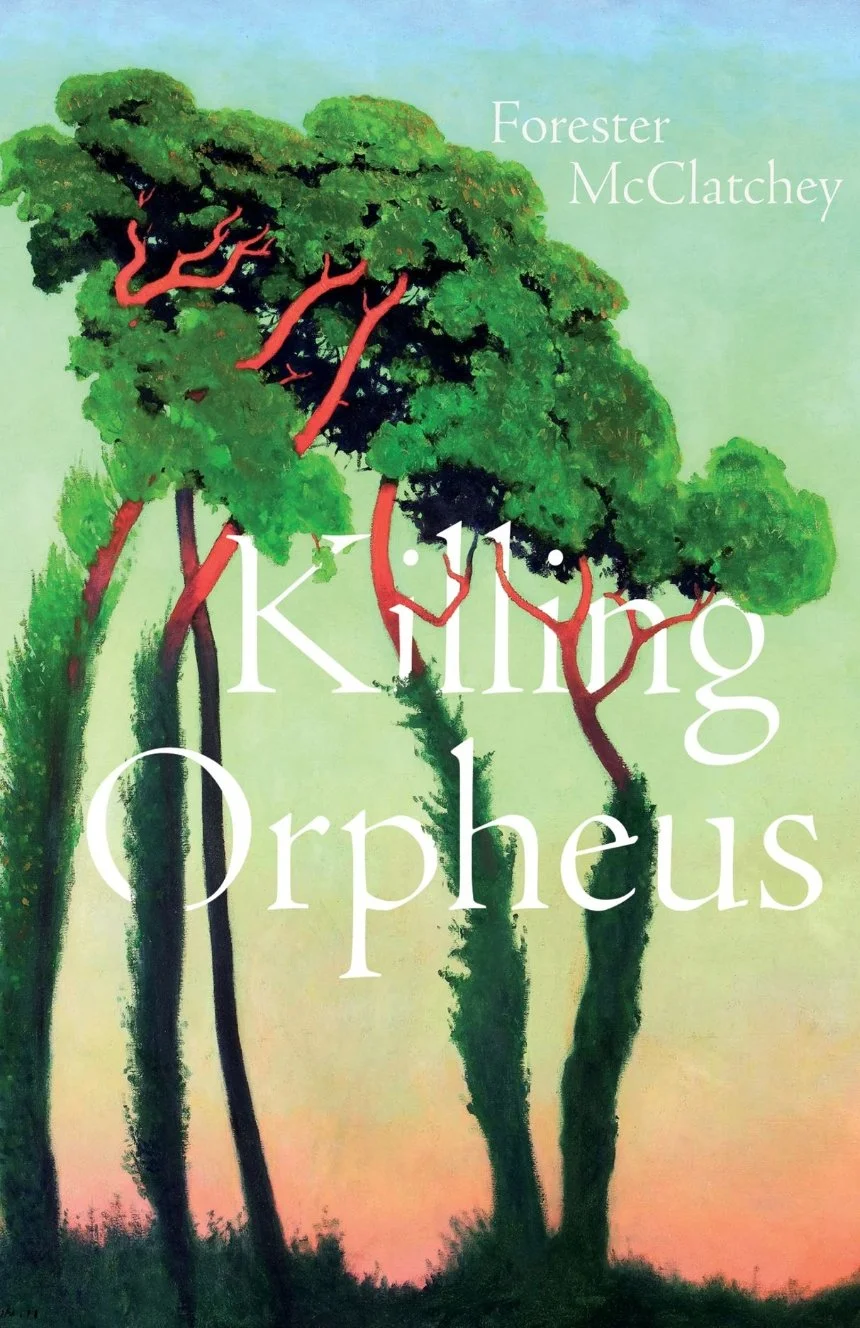
A book that holds death in one hand and wonder in the other, Killing Orpheus explores the horror of mortality, the brutality of history, and the gentle miracles of love. Using received forms, especially the sonnet, this collection cycles through various speakers, including an aging Penelope, Frankenstein’s monster, Isaac beneath Abraham’s blade, and an elephant in Hannibal’s army. Here are sprays of flowers and hungry alligators, lethal snakes, and a baby’s first breath. Here are poems that reckon with death, but for the sake of life. Here is a poetic consciousness that shows us we must dare to make “a truce with loss” in order to go “spinning into love’s bizarre abyss.”
“"We enter an elemental realm in Forester McClatchey’s poetry where 'Night reveals the busy moods of love' and the sleeping mind is 'a zoo of dreams.' Romantic things, night, love, the body, dreams, are present with their timeless proportions, often but never obviously in sonnets, always new somehow and surprising and yet familiar, like the work of a young master on his way to becoming an old one. W. H. Auden moved, lived, and had his being in this world. It is the classic country of poetry and Forester McClatchey is an outstanding new citizen."
Mark Jarman, author of Zeno’s Eternity
"Every so often—not very often—you read a first collection by a young poet and know you’re hearing a voice that will matter to lovers of poetry in a hundred years, and I felt that on opening Forester McClatchey’s Killing Orpheus. Like Adam before he could name things (in this poet’s remarkable 'Adam's Task'), I 'heard whorled languages of ferns' and am confident they will only keep uncoiling."
John Jeremiah Sullivan, author of Pulphead
“"Forester McClatchey knows that love binds us to a world of loss, a world in which the mundane and the catastrophic walk side by side. In his exceptional poems, he hears 'a humdrumming, a daily beat/that measures us, trembling through the void' and knows that breath is 'the slog of getting the gift. / The awkward, slow rowing away from death.' In that light of that knowledge, he beseeches the dead: 'Tell me how to live. Worm into my ear. / I want one instant of my life to be clear.' His probing, precise, and meticulously crafted poems create those longed-for moments of clarity and then share them with us, his fortunate readers."
Andrew Hudgins, author of After the Lost War